 EpoxyGrind
Best picks
Best Concrete Crack Fillers Before Epoxy (2026)
The right filler depends on the crack, not the brand — a rigid structural filler and a simple hairline-crack powder solve different problems.
See our full crack repair guide for the complete process — cleaning, routing, and how to level a repair flush before grinding. Below is what to actually buy, split by crack type.
| Product | Type | Set/cure time | Best for | Price |
|---|---|---|---|---|
| PC Products PC-Concrete Two-Part Epoxy Crack Filler | Two-part rigid epoxy paste | 20min work time, 4hr cure @75°F | Wider, structural, or vertical cracks | See retailer |
| DAP Concrete Crack Filler (1.62 lb) | Water-activated dry powder | See label | Hairline, stable, cosmetic cracks | See retailer |
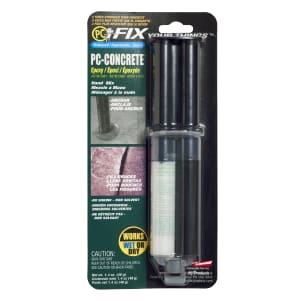
PC Products PC-Concrete Two-Part Epoxy Crack Filler
PC Products
A rigid, high-strength two-part epoxy paste built for real structural repair and anchoring, not just cosmetic filling.
PC-Concrete is a high-strength structural epoxy paste rated for both crack repair and anchoring applications (bolts, dowels), which tells you how much load-bearing strength it's built for. Sold in small syringe (1.4oz) and cartridge (8.6oz) sizes — plan quantity around your crack count, since this isn't sold in bulk tubs the way a simple powder filler is.
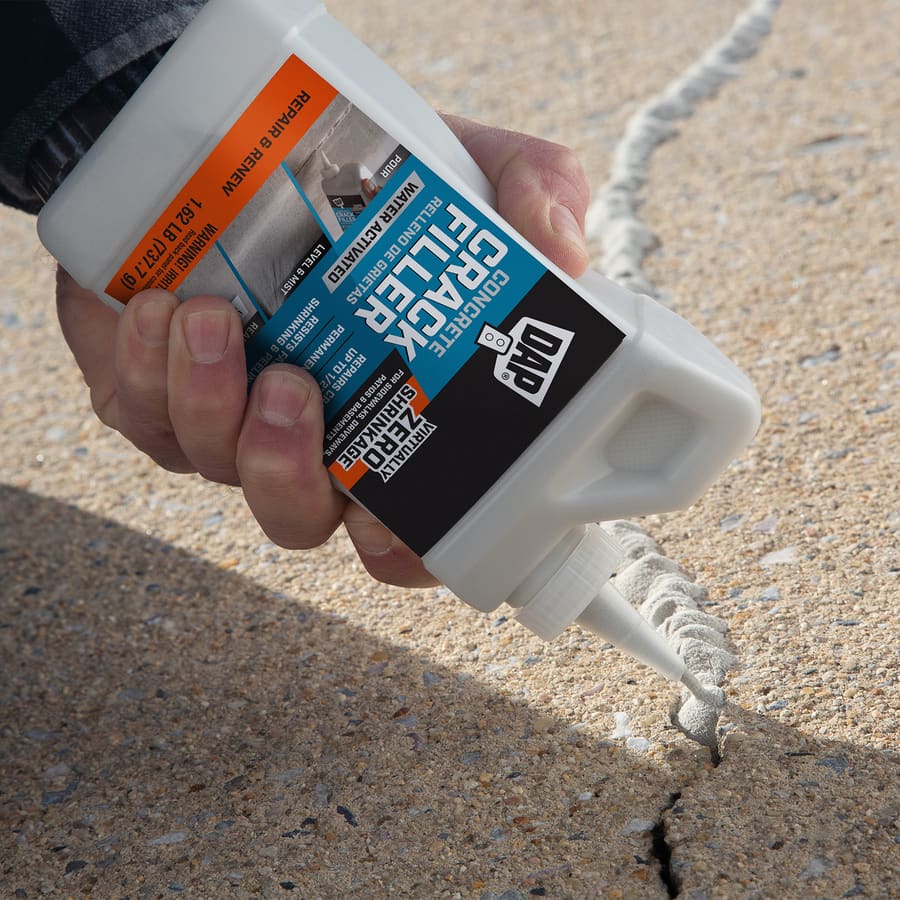
DAP Concrete Crack Filler (1.62 lb)
DAP
Pour-and-dampen application with no mixing — the fastest, lowest-skill option for a straightforward cosmetic crack.
DAP's crack filler skips two-part mixing entirely — pour the dry powder into the crack, dampen it with water, and it hardens in place. This is the right tool for straightforward hairline cracks that aren't showing any sign of movement or structural concern, where a full epoxy repair is more product (and cost) than the job needs.
How we evaluate
We split this ranking by crack severity rather than treating all crack fillers as interchangeable — a rigid structural epoxy and a simple cosmetic powder solve genuinely different problems, and using the wrong one either wastes money (epoxy paste on a hairline crack) or under-repairs a real structural issue (powder filler on a wide, moving crack). Specs above are pulled from the manufacturer/retailer listings linked at the verified date shown; we have not independently bench-tested strength or cure claims. When a crack looks structural rather than cosmetic — see our repair guide for how to tell — consult a professional before any DIY filler.
Rather have a pro do it?
Upload a photo and get a priced estimate in seconds — no obligation.
FAQ
Can I use a simple powder filler on a wide or structural crack?
No — a cosmetic filler doesn't have the strength or bonding characteristics needed for a structural repair, and it can fail again under the same stress that caused the original crack.
Do I need to prime the crack before filling it?
Not typically for these products, but always follow the specific manufacturer's instructions — some structural epoxy systems recommend a bonding agent for very deep or wide cracks.
How long do I need to wait before grinding over a filled crack?
Follow the product's full cure time, not just its set/tack time — grinding before a filler is fully cured smears it instead of leveling it flush with the surrounding slab.
Are these fillers paintable/coatable with epoxy once cured?
Yes, both types are compatible with a subsequent epoxy coating once fully cured and ground flush — that's the intended use case for both, unlike some asphalt-oriented crack fillers which are not epoxy-compatible.