 EpoxyGrind
Best picks
Best Metallic Epoxy Floor Kits (2026)
Metallic is the hardest DIY finish to get right — start with a kit that has real DIY support and instructions, not just a generic clear resin.
Metallic epoxy is a clear or near-clear 100%-solids base with metallic pigment powders mixed in — the marbled look comes from application technique as much as the product itself. See our metallic epoxy application guide for the technique side; below is what to actually buy.
| Product | Mix ratio | Working time | Cure time | Price |
|---|---|---|---|---|
| Leggari Metallic Epoxy (Clear) | See product page | See product page | See product page | $50.00–$9,781.00 (by size) |
| Stone Coat Flooring Epoxy Midcoat (Metallic) | 2:1 | 70 minutes | 3-7 days | See site |
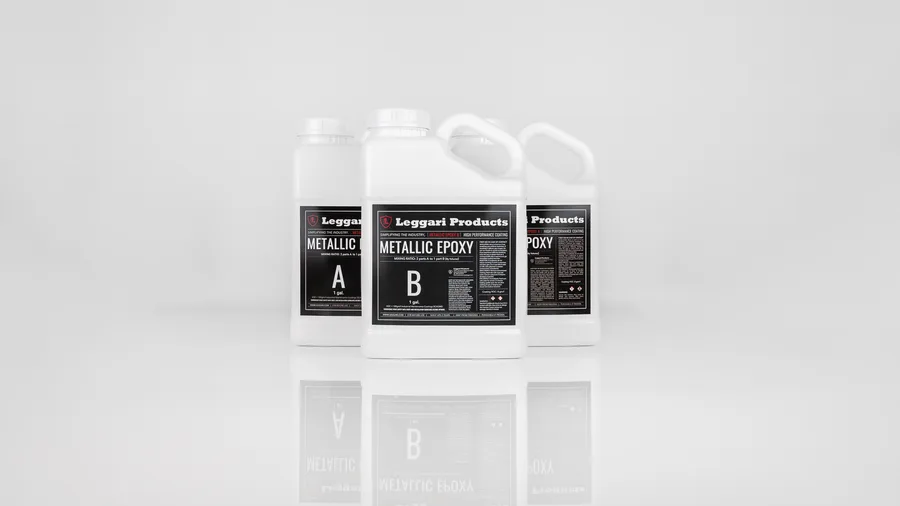
Leggari Metallic Epoxy (Clear)
Leggari
$50.00–$9,781.00 (by size)as of 2026-07-03
Scales from small accent pours to whole-floor jobs, with a large library of tutorial content specifically for this product.
Leggari's metallic epoxy is sold across a wide range of sizes, from small test-batch quantities up to whole-garage volumes, which makes it easy to buy a small test pour before committing your full budget to the real floor — something we recommend regardless of which product you choose. Leggari also publishes extensive video tutorial content specifically for their own product's behavior.
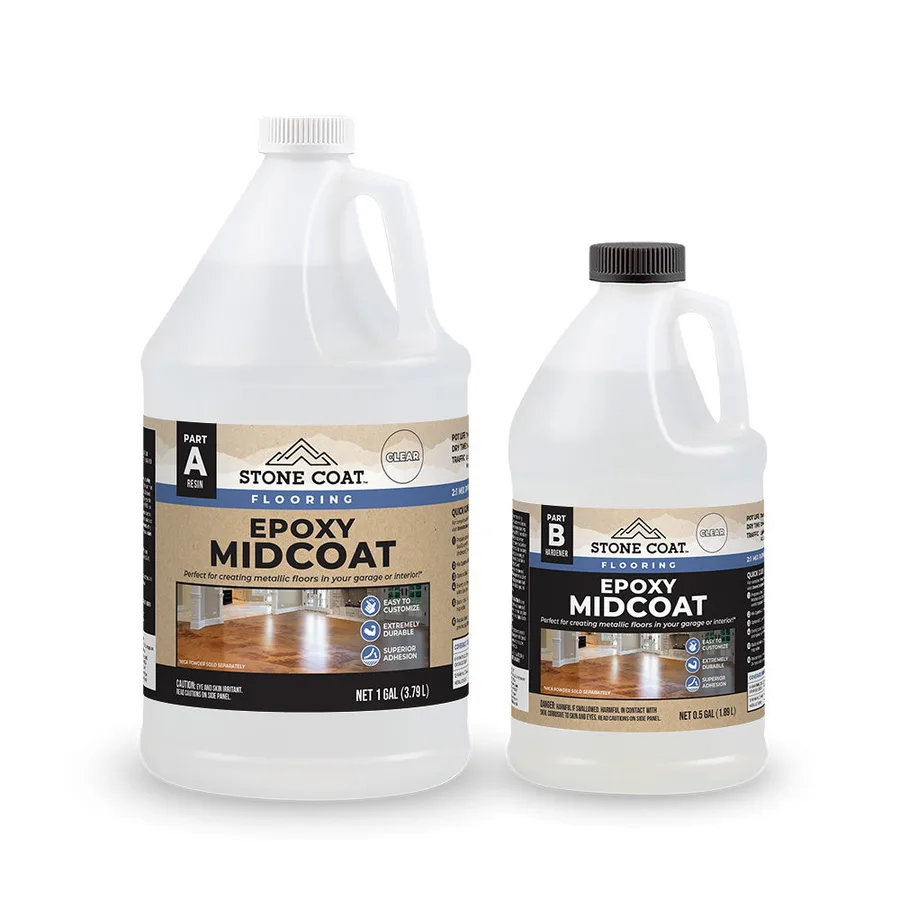
Stone Coat Flooring Epoxy Midcoat (Metallic)
Stone Coat
A 2:1 mix ratio with a generous 70-minute working time — more forgiving for a first metallic attempt than a fast-setting system.
Stone Coat's Flooring Epoxy Midcoat is sold as part of a structured project kit (their 15-gallon bundle includes 15 bags of pigment powder — 9 of a primary color, 6 of an accent), which takes some of the color-planning guesswork out of a first attempt. The 70-minute working time is notably longer than many competing systems, giving a first-timer more real time to work the surface before it sets.
How we evaluate
For a first metallic attempt, we weigh working time heavily — a longer window forgives a slower first pass — along with whether the manufacturer provides real technique-specific tutorial content, since metallic's biggest DIY risk is technique, not product quality. Specs above are pulled from the manufacturer listings linked at the verified date shown; where a manufacturer's page didn't publish a specific number (noted as "see product page" or "see site" above), we're not guessing at one. Always do a small test pour before committing to your full floor — see our application guide.
Rather have a pro do it?
Upload a photo and get a priced estimate in seconds — no obligation.
FAQ
Do I need special tools for metallic epoxy that a standard epoxy job doesn't need?
The core tools (notched squeegee, low-RPM mixing drill) are the same. Some installers add a heat gun or propane torch for advanced pigment-movement techniques, which is optional and best practiced on a test pour first.
Can I do a small metallic accent area instead of the whole garage?
Yes — metallic is popular as an accent border or a small feature area precisely because it's technique-intensive on a large scale. A smaller test area, or a deliberately smaller feature zone, is a reasonable way to get the look with lower risk.
Why do these listings not show exact coverage rates per gallon?
Metallic coverage varies more than standard epoxy because it's applied at variable thickness by design (to encourage pigment movement) — manufacturers generally publish size-by-square-footage kit options rather than a fixed sq-ft-per-gallon number.
Is metallic epoxy more expensive than a standard flake floor?
Generally yes, both in material cost and in the added risk of a technique-heavy first attempt. If budget or first-timer risk tolerance is a concern, a flake system is the more forgiving and typically cheaper choice — see our full garage floor epoxy kit rankings.